
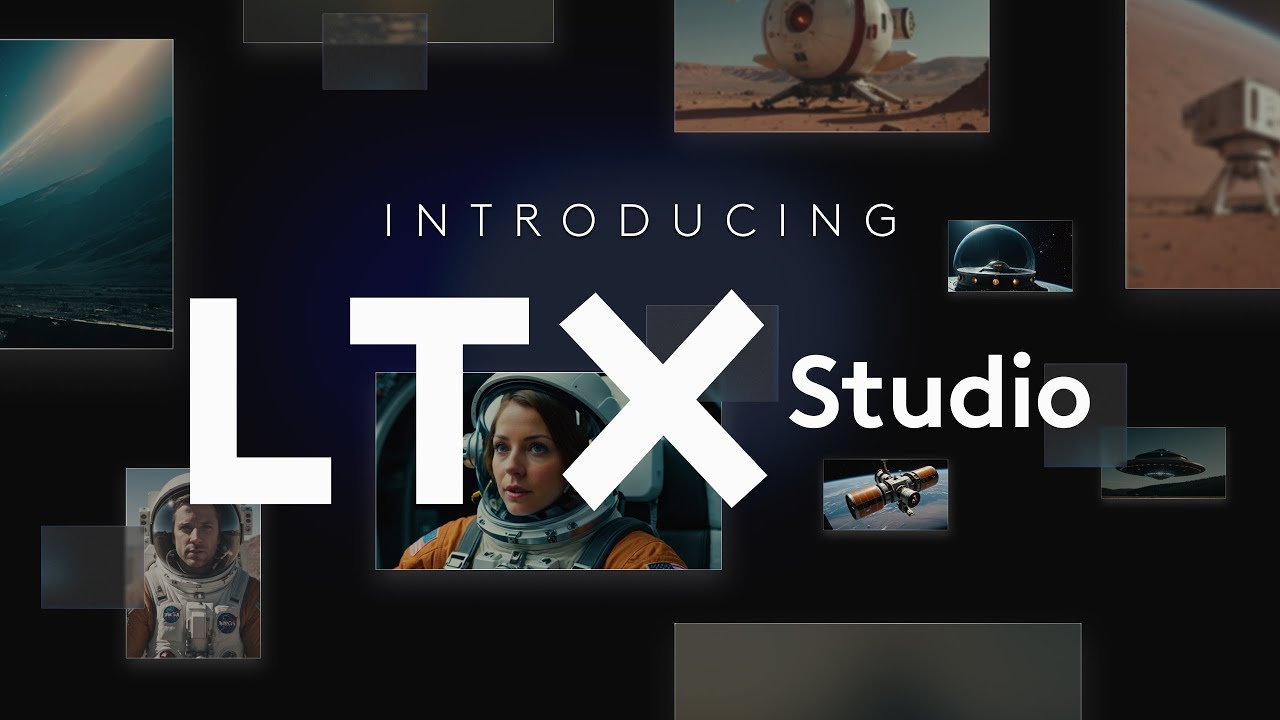
The LTX-2 Pro generative model by Lightricks marks a significant advancement in AI-driven video production, offering a unified system for transforming text, images, and audio into fully synchronized, high-fidelity video outputs. Designed with the needs of filmmakers, creative studios, and digital content producers in mind, LTX-2 Pro delivers cinematic quality with operational efficiency bridging creative vision and technical execution with precision and speed.
Core Capabilities and Workflow Integration
LTX-2 Pro stands out for its ability to generate visual and auditory elements concurrently. By producing synchronized dialogue, motion, and ambient effects within a single generative pass, it eliminates the fragmented editing stages traditionally required in post-production. This seamless integration ensures audiovisual coherence and significantly accelerates content pipelines.
The model is capable of rendering 4K resolution at up to 50 frames per second, all while optimizing for compute efficiency achieving roughly 50% reduction in processing cost compared to prior-generation systems. This performance-to-cost ratio enables rapid iteration cycles without compromising quality.
LTX-2 Pro is available in three modes:
- Fast – optimized for rapid prototyping and ideation.
- Pro – suited for balanced quality during production phases.
- Ultra – tailored for final output with cinematic-grade fidelity.
This modular approach allows creative teams to transition smoothly from concept to delivery within a unified environment.
Creative Control and Toolchain Compatibility
The model provides granular creative control over stylistic and compositional elements. Users can direct camera motion, set frame-level transitions via keyframing, and simulate dynamic perspectives through virtual camera paths. Additionally, LoRA fine-tuning enables consistent branding and artistic continuity across content variations.
LTX-2 Pro integrates seamlessly with industry-standard tools such as Adobe After Effects, Blender, and Unreal Engine, supporting both manual workflows and automated pipelines. An open API is available for custom deployment, allowing integration into existing production stacks or cloud-based orchestration systems.
Technical Architecture
At its core, LTX-2 Pro leverages a hybrid of diffusion-based generation and transformer-based temporal modeling to maintain both spatial accuracy and motion continuity across frames. By operating in a latent video representation space, it achieves high performance without sacrificing visual detail.
The system supports multi-GPU environments, including configurations with consumer-grade hardware. It currently supports generation of clips up to 10 seconds, with a roadmap extending to 15 seconds and beyond. Deployment is supported via Lightricks’ cloud platform or on-premise, with local builds requiring Python 3.10+, CUDA 12+, and PyTorch 2.1+.
Licensing and Openness
In alignment with growing demand for transparency and customizability, Lightricks plans to release the model weights and core development tools under a permissive open-source license by late 2025. This will empower the developer and research communities to fine-tune the model for specialized applications, and to extend its capabilities within domain-specific contexts.
Enterprise clients will also have access to extended licensing options, including support for on-premise deployment, SLA-backed performance guarantees, and integration services for large-scale workflows.
Applications Across Industries
LTX-2 Pro is already seeing adoption across multiple sectors:
- Film & Television: Used for previsualization, animatics, and concept reel development.
- Marketing & Advertising: Enables rapid production of campaign content with broadcast-ready quality.
- Game Development: Facilitates generation of narrative cutscenes and in-engine cinematics using existing asset libraries.
- Archival Restoration: Enhances legacy footage with upscaled detail, stabilized motion, and contextually inferred content.
Strengths and Current Limitations
LTX-2 Pro significantly reduces rendering time, cuts production costs, and introduces a high degree of creative autonomy all while maintaining alignment with professional-grade standards. Its modular design and future open-source accessibility foster a collaborative ecosystem ripe for experimentation and cross-industry innovation.
However, a few constraints remain:
- Clip duration is capped at 10 seconds, with extended support in development.
- Vertical (9:16) video support is not yet available.
- High-fidelity generation in Ultra mode still benefits from high-end GPU infrastructure.
- As with any synthetic media tool, responsible and ethical usage is paramount.
Competitive Landscape
While models such as OpenAI’s Sora and Google’s Veo push boundaries in generative video research, LTX-2 Pro distinguishes itself through its focus on production-ready deliverables. Unlike systems optimized for experimental outputs or short-form generation, LTX-2 Pro is purpose-built for workflow integration, audiovisual synchronization, and scalable content generation.
FAQS
What exactly is LTX-2 Pro and how does it differ from other versions?
LTX-2 Pro serves as the “review mode” of the LTX-2 engine, delivering high visual fidelity with fast turnaround. It targets daily content creation and iterative workflows (rather than final cinematic delivery, which is reserved for the “Ultra” mode).
Which workflows suit LTX-2 Pro best?
It suits marketing teams, creative agencies, and studios that need polished visuals quickly without full final-render workflows. It bridges rough ideas and final delivery.
What are the input types and durations supported?
LTX-2 Pro supports text-to-video and image-to-video generation; current durations are 6, 8 or 10 seconds per clip (longer durations come later).
Is audio generation integrated, and does video and sound align?
Yes LTX-2 models generate visuals and audio in one coherent process, thereby synchronizing motion, dialogue, ambience and music.
What hardware or software requirements apply for LTX-2 Pro?
For deployment (on-premises or via API) you’ll need a modern GPU architecture, and use Python 3.10+, CUDA 12+, PyTorch 2.1+ if you run the model locally.
Can I fine-tune LTX-2 Pro for my own brand or style?
Yes the model supports LoRA fine-tuning and keyframe conditioning, enabling stylisation for brand consistency and creative control.
What are the limitations I should know?
Clip length currently maxes out around 10 seconds; aspect ratios like 9:16 for vertical formats are still under development; high-end fidelity still requires strong GPU hardware.
Is LTX-2 Pro open-source?
Yes the underlying LTX-2 engine is slated to be released under an open-license, including model weights and code, enabling customization and research.
How does pricing work for commercial use?
Pricing varies depending on resolution, durations, and mode (Fast, Pro, Ultra). For example, third-party API documentation shows approximate pricing per second for certain resolutions.
How do I integrate LTX-2 Pro into my production workflow or pipeline?
You can access it via the LTX API, embed into editing tools or game engines, use image or text prompts, keyframe controls, and even image-to-video transformations. The integration supports rapid iteration and direct output into production pipelines.
Deja un comentario